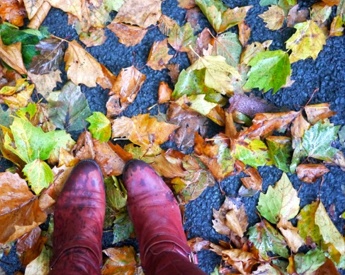
Thousand Word Thursdays: A Free Ride in Florence

Each Thursday we will post a photo worth a thousand words from one of CAPA International Education‘s global cities and let the image speak for itself. 

UntitledPhoto: Free ride in Florence by Cignale

Social Share Toolbar

Connecting Global Cities: City Squares

“Connecting Global Cities” is a monthly column written by Colin Speakman, Director of China Programs for CAPA International Education.

—–

When staying in a global city, where does one “center” one’s life? Is there an area, other than where staying, where one returns to regularly to chill out, hangout, and perhaps get some space? One likely possibility is a famous city square, often steeped in history. They do differ in content and role.

Times Square
Photo: Times Square, NYC, USA by Simona Barbu 

For many visitors to New York, Times Square will be a good example. It is full of neon like a beacon from afar and plenty of cafes, eateries and entertainment. Also, Times Square is globally famous for the photographs of Americans welcoming in the New Year. It is a lot different from Trafalgar Square in London (below) – also a famous place to celebrate New Year but without neon signs or cafes on the square.

Some city squares form the center of life. When spending time in Spain’s Salamanca, one is told that if one sits long enough in the Plaza Major all the residents of the city will pass by. Perhaps that is less likely in Spain’s capital city of Madrid, but it too has a magnificent Plaza Major steeped in history and architectural splendor. These Spanish squares offer lots of alfresco dinning and the opportunity to truly chill out to reflect on life and watch some residents walk by. The Plaza Majors vied for best in Spain and I have my own view on that.

Plaza Major Madrid 75330
Photo: Plaza Major, Madrid, Spain by Al Greening

There’s a different feel in Cuba’s Havana with its huge Plaza de la Revolucion (Revolution Square) with the famous image of the revolutionary leader, Che Guevara, a military fighter by example, on the side of one of the buildings, and the monument to Jose Marti (dating from 1996) a non-soldier revolutionary through advocacy and poetry as an interesting contrast. When visiting Havana on National Day, the TV pictures in my hotel showed a big crowd in the square. I rushed down with local friends, to find somewhat fewer people there. My friends explained that the authorities sometimes start up previous year footage on TV till the crowds build up!

Havana
Photo: Revolution Square, Havana, Cuba by Flyer E901

Of course Beijing and Havana maintain good relations and there’s definitely a similar feel of large concrete space and some solemnity in visiting the Chinese capital’s Tiananmen Square (see below). In the world news for the wrong reasons 14 years ago on May 35th (a reference to the sensitivity of printing the true date) but much has moved on since then and we will make no further reference.

Photo: CAPA Beijing students in front of the Monument to war heroes in Tiananmen Square by Colin Speakman

Many city squares are at the confluence of major road links. Some squares are very concrete and others contain a good blend of greenery but not so much as to re-define them as a park – that is a topic for another Connecting Global Cities column. Perhaps one of the greenest squares in CAPA International Education’s global cities is People’s Square in Shanghai.

Photo: CAPA group in Peoples’ Square in Shanghai by Colin Speakman

With these thoughts in mind, let’s look at what city squares have to offer in CAPA International Education‘s eight global cities.

BEIJING, CHINA

Tiananmen Square

Photo: CAPA students in Tiananmen Square from Colin Speakman

There has been a square in some form outside of Tiananmen (a famous city gate meaning Heavenly Peace) in Beijing since 1651. However, the modern Tiananmen Square was rebuilt under orders of Chairman Mao after the founding of the People’s Republic of China (PRC) in 1949 and work was finally completed in 1959. The first “building” on the modern square itself was the monument to the fallen heroes of China in several wars. The square also houses Mao’s Mausoleum (built in 1977 after his death in 1976) and some modern huge TV screens first erected for the 2009 60th anniversary of the founding of the PRC.

There are many buildings bordering the square but they are separated by busy roads. Two of the most impressive ones are the Great Hall of the People and the National Museum of China. At the top is the Tiananmen (gate) and through that the entrance to the Forbidden City. At the bottom is the Qianmen (gate) and behind that lies Qianmen Commercial Street. Tiananmen Square is very much a place to walk through but it’s not designed as a place to sit and relax. Be prepared for security checks on bags and a lot of visible and less visible policing.

BUENOS AIRES, ARGENTINA

Plaza San Martin

Plaza San Martin a la Noche
Photo: Plaza San Martin at night by Tosin Arasi 

Plaza San Martín in Buenos Aires is definitely one of the greener plazas. Carlos Thays designed the space on a gently sloping bluff. It is a place to chill out with plenty of seats, though they fill quickly on warm afternoons with locals eating snacks and couples chatting. There’s an imposing bronze and marble monument to honor the South American liberator San Martín. It is a great escape at the end of the very busy downtown Florida Street – one minute hustle and bustle, the next minute open space in the heart of the city.

Although the square is very popular with locals, if you’re there are as tourist, try not to look too much like one. Unfortunately, there are some undesirables who target the area looking for pick-pocketing and other opportunities to annoy visitors. As in any global city’s most popular areas being circumspect is always advisable. It is worth visiting for some great views and monuments like the Malvinas War Memorial. As a Brit, I won’t spend too much time on that Falklands v Malvinas issue.

DUBLIN, IRELAND

Mountjoy Square

Mountjoy Square October 2011
Photo: Mountjoy Square, Dublin by Keith Carney 

Mountjoy is Dublin‘s only true Georgian square (because each of its sides measures precisely 140 meters in length), although there are five squares termed Georgian squares in the Irish Capital. It can be found on the north side of the city, quite close to the River Liffey. The square dates from the late 18th century and takes its name from the second Luke Gardiner, (aka Viscount Mountjoy). It is surrounded on all sides by individual terraced, red-brick Georgian houses. Construction took from the 1790s to 1818.

The square is attractive to visit because of its history – especially literary. The writer James Joyce lived around the square during his early years, playwright Séan O’Casey wrote and set some of his most famous plays on the square and W.B. Yeats stayed there with his friend John O’Leary. The majority of the Oscar-winning film Once was made in the square. Historic meetings have taken place in Mountjoy Square, including planning for the famous Easter Rising (a 6 day Irish Rebellion against British rule in Easter 1916) and some of the earliest Dáil (lower house of Irish Parliament) meetings.

FLORENCE, ITALY

Piazza Della Repubblica

FLORENCE - FIRENZE - Piazza della Repubblica
Photo: Piazza Della Repubblica by Michel Guilly 

This city square, Piazza Della Repubblica, is on the former site firstly of the Florence‘s forum and then of the city’s old ghetto, which was removed during the city improvement works (Risanamento). During this brief period, Florence was the capital of a reunited Italy from 1865-1871. The square boasts historic villas and cafes and many locals and visitors will pass through, or by, it in walking from the Piazza del Duomo to the Ponte Vecchio.

The Piazza della Repubblica became a familiar square to me as for several years I oversaw study abroad programs based in a villa overlooking the square and enjoyed balcony views during visits. The Giubbe Rosse cafe on the square is a historic venue that I enjoyed many a morning cappuccino in. There are many good cafe and eating options around the square and sometimes music events and other entertainment in the evening.

ISTANBUL, TURKEY

Taksim Square

Taksim Square

Taksim Square is considered to be at the heart of Istanbul on the European side, with the central station of the metro network right there. It attracts tourists and local leisure seekers as it is famed for its shops, restaurants and hotels. It is yet another example of a welcome-in-the-New-Year venue.

Its claim for top choice is backed by also having the Monument of the Republic which was crafted by the famous Italian sculptor Pietro Canonica and unveiled in 1928. At that time, the monument commemorated the 5th anniversary of the founding of the Republic of Turkey. Add the Atatürk Cultural Center, also with an opera house, right there and one has a taste of history and modern fun in one place.

LONDON, ENGLAND

Trafalgar Square

Trafalgar Square
Photo: Trafalgar Square by john.king

The capital of the United Kingdom boasts many squares – notably Leicester Square for theaters, cinemas and night clubs (a neon place), Sloane Square for high end shopping and Parliament Square in front of Big Ben and Westminister Abbey. After driving through or around them for many years, my vote goes to Trafalgar Square linking the Strand, Charing Cross Road, Whitehall and the Mall, as London‘s largest square as well as a common place for Londoners to see in the New Year.

The square is named to commemorate the famous battle of Trafalgar (where Britain defeated combined French and Spanish naval fleets in 1805), with (Lord) Nelson’s column prominent. Add the fountains and the imposing lions and that it is overlooked by the National Gallery, Canada House and South Africa House, with the church of St.Martin’s-in-the-field looking on from the North East corner, and one has a majestic square which gives visitors a good sense of history.

SHANGHAI, CHINA

People’s Square

Photo: Ariel view of People’s Square in Shanghai by Colin Speakman

Another Square at the confluence of important roads and transport links is People’s Square in Shanghai. The Square lies at the intersection of West Nanjing Road (the most important commercial road in China) and Nanjing Pedestrian Street. People’s Square metro station connects lines 1, 2 and 8 and needs no fewer the 20 exits. It is so large it provides an underground mini shopping city, taking 15 minutes to walk between the furthest apart exits under the square.

Above ground, the Square has a fairground, large pond, restaurants and cafes and is home to the Shanghai Museum, the Shanghai Planning Exhibition Hall, the Shanghai Art Museum, the Museum of Contemporary Art and the Shanghai Grand Theater among others. It is overlooked by many modern hotels and skyscrapers, the famous Park Hotel (the tallest building in China in 1935), the Shanghai wax-works in the New World Center and several huge shopping malls. It’s a happening place and definitely Shanghai’s top square.

SYDNEY, AUSTRALIA

Taylor Square

2010 TAYLOR SQUARE
Photo: Taylor Square, Sydney by lindsaybridge

A number of so-called ‘squares’ in Sydney are really dominated by a tall impressive building with little else in the locale or space for a proper square. However, Taylor Square stands out as a multi-featured venue. Again, like many squares it is located beside a major road intersection, where Oxford Street meets Flinders Street and Bourke Street. The square sits above the tunnel section of the Eastern Distributor part of Metroad 1.

Named after Sir Allen Taylor (1864-1940), a timber merchant, ship builder and Lord Mayor of Sydney who achieved the widening of the famous Oxford Street, it is popularly known as “Gilligan’s Island” because of three large palm trees that once occupied (but no longer) the square. It is a center of the city’s nightlife, including the gay community, with many bars, nightclubs, restaurants, cafes and shops. A notable historic landmark is Darlinghurst Courthouse, a formidable sandstone building dating from 1844.

Do you have a favourite square from your travels abroad or in your home city? If so, tell us about it in the comments!

Social Share Toolbar

10 Comforts of Home in Istanbul

Though CAPA International Education strongly encourages our students to experience as much of the local culture as possible while studying abroad, we also know that sometimes it’s necessary to seek out a few comforts of home. Here are 10 tips for our students in Istanbul looking for a taste of home.

1. AMERICAN PRODUCTS. Whether it’s Aunt Jemima pancake mix, Jif peanut butter, Listerine mouthwash, Apple Jacks or Newman’s salad dressing you’re craving, there are a few places in Istanbul to fine those bits and pieces you miss from home. Start with Boff in Nişantaşı. They sell super-sized American products, (obviously more expensive than they are back home since they are imported but sometimes a craving can’t be ignored)! Santral Şarküteri (Santral Charcuterie) in Bebek has all sorts of international products. This is the place for Jack Daniels Tennessee Barbecue Sauce, Vermont maple syrup and Oreos. Looking for  Doublemint gum or Philadelphia cream cheese? Try Merkez Şarküteri (Merkez Charcuterie) in Levent. Lastly, there’s Doğa Şarküteri, which is open 24/7! It’s also located in Levent and stocks Nesquick, Uncle Ben’s rice and Ocean Spray cranberry juice. The Guide Istanbul has a great article on buying American products in Istanbul.

Photo: American products in Istanbul by The Guide Istanbul

2. NEIGHBORHOODS. While American expats in Istanbul tend to be scattered around the city, there are a few neighborhoods that have an “American vibe” comparable to cities like Washington DC, Boston or Los Angeles. Areas of both Bebek and Etiler have streets that are lined with houses that even have yards like you see back home rather than rows of apartment blocks. There are other green spaces nearby as well, most notably the popular and beautiful Bebek Park.

Photo: Bebek Park from the Sabancı Foundation website

3. SUPERMARKETS. Comparable to US supermarkets, walk into MMM Migros or Carrefour in Istanbul and you’ll feel a bit like you’re shopping at home in terms of how everything is organized. As the are in the States, the aisles divide the stores into different areas of groceries with a bakery section, produce area and meat counter and check outs take cash and credit cards. They also have some American or other foreign products like cheeses, hot sauce and some organic foods.  


Photo: MMM Migros by Yelp contributor Etkin C.

4. SQUARE PEG THEATRE TROUPE. Run by a lively, and active group of expats in Istanbul, the Square Peg Theatre Troupe is a great way to get involved not only with other Americans but with people from all over the world while you’re studying abroad in Istanbul. They regularly get together for a host of creative activities like poetry readings and open mic nights, theater performances, writing and acting workshops, art exhibitions and movie nights. Keep an eye on their website for upcoming events.

Photo: A performance shot from the Square Peg Theatre Troupe’s website

5. SANTRALISTANBUL CAMPUS, BILGI. CAPA students attend classes at Bilgi University. One of the three campuses, SantralIstanbul, located right above the Golden Horn, was designed by taking inspiration from a typical American style campus. It was also originally the first power station in Istanbul. It’s a great place to learn and socialize too. This campus hosts more than 400 conferences, festivals and other scientific and social events a year! There’s also an art gallery here and a fun hands-on Museum of Energy. 

Photo from the Bilgi website

6. TRIBECA. With pictures of NYC covering the walls, New Yorkers (and of course other bagel-loving Americans) will feel at home at Tribeca, which serves about 14 different bagel varieties. The owners of the shop lived and worked in NYC and wanted to bring a slice of the culture to Istanbul. They were even featured in a New York Times article when they opened many years ago. Try the bagel with dried tomatoes. Yum! And it’s not just bagels but other easy-to-eat comfort food like pizza and pasta. Wash your lunch down with a delicious fruit smoothie. Another highlight is the availability of free wi-fi.

Photo: Tribeca by Yelp contributor B A.

7. NISANTASI. With the third largest expat community in Istanbul this area has a mixture of cultures and you’ll often find other Americans enjoying the shopping and restaurant scene here. One favorite for dinner is Ranchero which is said to have some of the best Mexican food in Istanbul. Nişantaşı is lined with stores, cafes, pubs, night clubs, beauty salons and just about anything else you could need while you’re studying abroad in Istanbul. On an unrelated note, Nişantaşı is also home to Nobel laureate Turkish novelist Orhan Pamuk who should be on your reading list!

Photo: Ranchero in Nisantasi from http://fesmekan.mynet.com

8. AMERICAN RESTAURANTS. There are a number of American fast food chains to be found in Istanbul (although we highly recommend at least going for a kebab  instead if you must have a fast food fix!). You’ll find Kentucky Fried Chicken, Pizza Hut and Carl’s Jr., which is located in the Cevahir mall and is the first of some 25 locations to be opened in Turkey in the next six years. There are also branches of Dunkin’ Donuts and Krispy Kreme dotted around the city.

I can read Turkish!
Photo: Dunkin’ Donuts in Istanbul by Zach Everson

9. SULTAN RESTAURANT AND PUB. An American style restaurant and pub, The Sultan is spread over three floors. You’ll find hamburgers and a view of the Aya Sofya here. They have sidewalk seating but also a roof terrace with a restaurant which has impressive views over the city! If you’re looking for nightlife, also try hip hop and R&B club Riddim which attracts a steady stream of American expats and visitors.

Photo: The Sultan from The Sultan’s website

10. CEVAHIR. If it’s a rainy day and you really need an American style shopping fix, head to Cevahir in the Sisli district. It’s one of the largest malls in the world with nearly 350 stores, some of which sell American brands. They also have cinemas, a bowling alley and a small roller coaster. But don’t stay too long. There’s a whole new city out there to explore!

Istanbul, Turkey
Photo: Cevahir Shopping Mall Istanbul by Joe Nazarian

Have any more recommendations? Leave us a comment!

Social Share Toolbar

CAPA Study Abroad Alumna Interview: Lindsay Law

Lindsay optimized her study abroad experience with CAPA International Education in Sydney during Spring 2012 by interacting with the local community and making Australian friends as well as enjoying CAPA’s MyEducation events that allowed her to discover some of the city’s hidden gems. With an internship at a homeless community center, Lindsay also saw the other side of life in Sydney and was also able to travel to Thailand for another adventure while abroad. After an unforgettable semester, she strongly encourages everyone to study abroad.

CAPA WORLD: Tell us a bit about yourself and your background.
LINDSAY LAW: I grew up in Orange County, California, but now live on Cape Cod in Massachusetts. I am currently a Psychology Major at UMass Amherst and I studied abroad in Sydney in Spring 2012.

CW: Why did you decide to study abroad and why specifically Sydney?
LL: I have always known that I wanted to go to Australia, I just didn’t know when. As soon as I found out that I could not only study abroad there but have an internship as well, I was sold. I had heard about the beautiful weather and beaches, happy people, and positive vibe. I was not disappointed.

CW: Tell us about your first impressions of Sydney and any that changed by the time you went home. What surprised you most about your host country?
LL: I had no idea what to expect before I arrived in Sydney! I knew what the Opera House looked like from afar based on good old Google images, but that’s about it. I didn’t expect it to be so big and definitely didn’t expect it to be so clean. What surprised me the most about Australia was how different it was from America. I had heard that it was very Americanized and pictured a clone of New York City, but found that the two couldn’t have been more different. Sydney was quaint, even with its size, and will always have my heart.

CW: Did you complete an internship while you were abroad? 
LL: My internship was one of my favorite parts of being in Sydney. I got placed with the Salvation Army at a homeless community center in the heart of the city called Streetlevel. I had the opportunity to work with many of the homeless community members in Sydney, which gave me a completely different perspective of the city. I learned about the welfare system in Australia and really got a chance to compare it to the welfare system here in America. My internship really pushed me outside of my comfort zone, but it ended up being one of the most influential experiences of my life.

CW: were the biggest challenges you faced in adapting to your host country? Most rewarding moment? 
LL: The biggest challenge I faced in adapting to my host country was getting used to the prices. The minimum wage is about four times what it is here in America, so naturally the prices were shocking at first. I adjusted, but definitely had to test my budgeting skills. Another big challenge was learning to navigate the city, especially because I didn’t have much experience with public transportation. Once I found my way around, though, I was able to explore without getting completely lost. The most rewarding aspect of my experience while studying abroad was proving to myself that I could travel on my own. Most of the other students in my program hadn’t traveled alone either, so we worked together to see as much as we could.

CW: Did you have a chance to interact with the local community? If so, tell us about one interaction that stood out for you.
LL: I was lucky enough to have many interactions with the local community. My internship helped me explore the underprivileged community, but I also had the chance to spend time with locals in my everyday Sydney life. I promised myself that I would come home with Australian friends, so I made a point to meet as many as possible during my time there. I met Australians my age at coffee shops, beaches, and social gatherings. I found that many of the Americans in my CAPA group didn’t reach out to the locals, and left wishing that they did. I definitely didn’t feel that way.  I now have friends in Australia who I could stay with if I went back to visit, and who could stay with me if they ever travel here to the states. I think that in order to completely immerse yourself into the culture of another country, you definitely have to build relationships with the locals.

CW: Talk a bit about CAPA academics. What were your favorite classes and why? Did you participate in any MyEducation events?
LL: The CAPA academics weren’t anything to worry about. The professors made sure that we were successful and were very fair because they understood that we were traveling and exploring a new place. My favorite class was Australian Cinema because it gave me a chance to learn about Australian films which I otherwise wouldn’t have. Our class got to visit a huge movie studio in Sydney which was really interesting. I participated in a few of the MyEducation events, and found that they brought me to places that I would consider “hidden gems”. The staff did a great job finding interesting places for us to go.

CW: What have you been up to since you returned to the US? Do you feel that your experience with CAPA contributed or will contribute to your success in starting your career?
LL: After I returned to the US, the first thing that I did was slept. I got the least amount of sleep that I have ever gotten while I was in Sydney, which I definitely do not regret. I then spent my summer working at a day camp, and then found myself back at UMass for my senior year. I became a Student Ambassador for CAPA and now spend a lot of time trying to encourage students to study abroad! My experience with CAPA changed my life forever, both personally and professionally, and will be something that I never forget. It will definitely contribute to the success of my career (whatever that might be) because I am a stronger person after my experience in Sydney.

CW: What advice would you offer other students currently on a study abroad program or considering one?
LL: The advice that I will give to students who are considering studying abroad is simple: DO IT! Whenever I meet students who are hesitant to study abroad, I ask them if they have ever met someone who didn’t like their experience. The answer is always no. For those who have already decided to study abroad I will first say congratulations, you are about to embark on an unforgettable journey. Take chances, step outside of your comfort zone, and do things that you never pictured yourself doing. You will become a better version of yourself and will see life in a new way.

CW: What did your study abroad experience teach you about yourself and those around you?
LL: My study abroad experience taught me that I can do anything. The fact that I was able to travel alone not only throughout Australia, but also throughout Thailand on my own proved to me that I am braver than I thought. It also brought out my thirst for life, and made me want to travel the world!

Thanks Lindsay!

Social Share Toolbar

CAPA’s New Social Media Moo Cards

In order to keep all of our social media platforms in one place, we’ve gotten some high quality cards from Moo.com with all of our links. Each one represents a different CAPA site, and we wanted to share them with you before we release them into the wild of study abroad fairs and study abroad offices around the country.

The photos below show the front side of the cards and the back is posted at the bottom of this entry. What do you think?

BEIJING
CAPA Beijing
10 reasons to study abroad in Beijing
10 hidden gems in Beijing 

BUENOS AIRES
 
CAPA Buenos Aires
10 reasons to study abroad in Buenos Aires
10 hidden gems in Buenos Aires

DUBLIN
 
CAPA Dublin
10 reasons to study abroad in Dublin
10 hidden gems in Dublin

FLORENCE
 
CAPA Florence
10 reasons to study abroad in Florence
10 hidden gems in Florence

ISTANBUL
 CAPA Istanbul
10 reasons to study abroad in Istanbul
10 hidden gems in Istanbul

LONDON
 CAPA London
10 reasons to study abroad in London
10 hidden gems in London

SHANGHAI
CAPA Shanghai
10 reasons to study abroad in Shanghai
10 hidden gems in Shanghai

SYDNEY
 
CAPA Sydney
10 reasons to study abroad in Sydney
10 hidden gems in Sydney

FOLLOW US 

Website | http://www.capa.org
Blog | http://CAPAworld.capa.org
Facebookhttp://www.facebook.com/CAPAstudyabroad
Twitter | http://www.twitter.com/CAPAstudyabroad
Flickr | http://www.flickr.com/groups/CAPAworld
Pinterest | http://www.pinterest.com/CAPAstudyabroad
YouTube | http://www.youtube.com/CAPAstudyabroad
LinkedInhttp://www.linkedin.com/company/CAPA-international-education

Social Share Toolbar

Thousand Word Thursdays: Tai Chi on the Bund, Shanghai

Each Thursday we will post a photo worth a thousand words from one of CAPA International Education‘s global cities and let the image speak for itself. 
Tai Chi on The Bund.Photo: Tai Chi on the Bund – early morning exercise in Shanghai by Jeroen Fransen

Social Share Toolbar

What Europe Means

Dr. Michael Woolf

“Thoughts on Education Abroad” is a monthly column written by CAPA International Education’s Deputy President and Chief Academic Officer Dr. Michael Woolf.

In this month’s column, he takes a look at the EU in its current economic crisis and extracts a positive outlook.       

———————–

“Insanity is contagious.”
- Joseph Heller, Catch 22

“See that little stream … we could walk to it in two minutes. It took the British a month to do it… a whole empire walking very slowly, dying in front and pushing forward behind. And another empire walked very slowly backward a few inches a day, leaving the dead like a million bloody rags.
- F. Scott Fitzgerald, Tender is the Night

In December 2012 I had the pleasure of speaking at conferences in two great European cities: Athens and Dublin. They are, as we all know, cited as examples of cities in crisis, exemplifying the degree to which the European experiment has “failed.” The two cities may occupy different positions in the current crisis but they are supposed to signify a fractured European Union and, according to some, the defeat of a European ideal.

Mini globe
Photo: Mini globe by Kingsdude/Dave

I am not telling you this because I think you should be particularly interested in my travel schedules but because it made me think about what Europe means to us as international educators and how we might talk about this among ourselves, in our communities, and, more to the point, with our students.

The National UK newspaper, “The Daily Telegraph” carried an article by Andrew Gilligan with the headline “The EU: so where did it all go wrong?”(30th December 2012). In many respects the title exemplifies the position of the anti-European lobby and embodies a set of assumptions that imply that it has, definitively, “gone wrong”. The way in which it has gone wrong, according to this view, is in the economic sphere and with regards to the Euro. The fragility of the currency is undeniable as is the uneasy nature of the Union at this point in history where economic trauma permeates our several environments. In April 2013, for example, unemployment in Spain reached over 26% of the potentially working population. There are real dangers in this predicament and there is real pain for the poor (as always most of the rich are insulated from suffering).  It would be foolish to disregard this reality.

It would be foolish also to see this as the failure of the Union. We know that politicians do not, as a rule, read history. If they did we would not be embroiled in Afghanistan. We, however, do have a responsibility as international educators to teach our students about the context in which the Union was founded and continues to function. Simply put, in the twentieth century there were two cataclysmic wars that originated, and were substantially fought, in Europe between nations that are members of the European Union. In World War I (1914 – 1918) an estimated 37 million people were casualties. At the Battle of the Somme alone over one million people died. In World War II (1939 – 1945) civilian deaths are estimated at somewhere between 38 and 55 million; military dead somewhere between 22 and 25 million.

This hideous historical context creates a moral imperative. Whatever the current economic traumas besetting Europe they alone are not what is ultimately important. The current version of a European Union came into being in 1993 but was preceded by a number of other associations beginning with the Hague Congress in 1948. What drove these efforts, and what we need to teach students about Europe, is that for over 60 years there has not been another war between the protagonists who butchered each other in the first 50 years of the twentieth century. That is the real achievement of the European Union and it is more important and more profound than any current economic crisis that will, inevitably, pass. The moral imperative is to remember the bloody insanity of those wars.

What the Euro sceptics have forgotten (or never knew) was encapsulated in the announcement in October 2012 that the European Union was to be awarded the Nobel Peace Prize:

The union and its forerunners have for over six decades contributed to the advancement of peace and reconciliation, democracy and human rights in Europe. .. The dreadful suffering in World War II demonstrated the need for a new Europe. Over a seventy-year period, Germany and France had fought three wars. Today war between Germany and France is unthinkable. This shows how, through well-aimed efforts and by building up mutual confidence, historical enemies can become close partners. …The EU is currently undergoing grave economic difficulties and considerable social unrest. The Norwegian Nobel Committee wishes to focus on what it sees as the EU’s most important result: the successful struggle for peace and reconciliation and for democracy and human rights. The stabilizing part played by the EU has helped to transform most of Europe from a continent of war to a continent of peace.

The award was controversial in some areas of European political life and was ridiculed by the leadership of the UK Independence Party.  Nigel Farage said he was “baffled” at the decision, which he claimed brought the Nobel Prize “into total disrepute”.

Students coming to Europe to study will hear these perspectives and more moderate, nuanced voices debating the Euro and the economic crisis but that is a limited perspective and not the only one that matters. The terms of the economic debate are familiar. We need to remind ourselves and our students that, as the Nobel Peace Prize indicated, there are other terms in which this issue needs to be considered: through the lens of the imperatives of historical memory. They need to understand the historical significance of the Union. I did not fight in a European War; my father and his father and his father did. I think that my children and yours will be spared that also. That is the profound achievement of the European Union.

The poet Siegfried Sassoon in “Aftermath” precisely reminds us of what really matters:

Have you forgotten yet?…
For the world’s events have rumbled on since those gagged days,
Like traffic checked while at the crossing of city-ways:
And the haunted gap in your mind has filled with thoughts that flow
Like clouds in the lit heaven of life; and you’re a man reprieved to go,
Taking your peaceful share of Time, with joy to spare.
But the past is just the same–and War’s a bloody game…
Have you forgotten yet?…
Look down, and swear by the slain of the War that you’ll never forget.


Social Share Toolbar

10 Comforts of Home in Florence

Though CAPA International Education strongly encourages our students to experience as much of the local culture as possible while studying abroad, we also know that sometimes it’s necessary to seek out a few comforts of home. Here are 10 tips for our students in Florence looking for a taste of home.

1. PAPERBACK EXCHANGE. Near the Duomo, you can find this little gem that’s popular with English speakers living in the city. The Paperback Exchange is about 34 years old now and has established a reputation for itself as one of the most important English language bookshops in Italy. The prices are cheap for English language books abroad with both new and secondhand titles on their shelves.

Photo: Paperback Exchange in Florence from the Paperback Exchange website

2. THE BRITISH INSTITUTE. The oldest overseas British cultural institute in the world, the library at the British Institute has a great collection of English language books. With about 50,000 books spread over three floors, it’s is claimed to be the largest lending library of English books in continental Europe!

Photo: The Library at the British Institute Florence from the BIF Facebook Page

3. I GIGLI. If you’re itching for a day of American-style shopping, the biggest mall nearby is just 30 minutes by bus from Florence. It’s called I Gigli and is spread over two floors. The mall has some American brands like Holister and Foot Locker as well as other international brands like Zara and H&M.

Photo: I Gigli in Florence by Yelp reviewer Luca G.

4. ODEON CINEMA. Built in an old opera Theater, the Odeon seems elegant for a cinema with its carpeted floors, glass dome and high ceilings. You can even sit in the balcony. You can watch movies in English here which will also have Italian subtitles so everyone call enjoy the film. It will also help you practice your Italian! Find it on Via degli Anselmi/Piazza Strozzi.

Firenze - Cinema Odeon: il Cinema più bello del mondo
Photo: Odeon Cinema in Florence by FREDERICKSTUDIO

5. THE DINER FIRENZE. Pancakes, bagels, burgers and milkshakes are the draw here at The Diner, not to mention french toast, omelettes and Arizona Iced Tea! It will give you a taste of home if you’re looking for a change from the Italian dishes you’ve been eating throughout the semester. This restaurant is popular with American study abroad students from CAPA and beyond, so you’ll definitely find yourself in the company of other Americans and other students. Find it on Via dell’acqua, 3.

Photo: The Diner, Florence from The Diner website

6. MAMA’S BAKERY. If you have a sweet tooth, you can pick up some American treats at Mama’s Bakery hidden on a small street behind Piazza Santo Spirito called Via della Chiesa, 34r. It’s owned by an Italian/American couple and serves up  brownies, cupcakes and muffins plus some savory options like cream cheese bagels and club sandwiches. Sit at one of the tables in the back or if there’s some sunshine, enjoy their little courtyard. Wonder why their bagels don’t have a hole?

Photo: Cupcakes at Mama’s Bakery from Mama’s Bakery website

7. TIJUANA. However delicious it may be, sometimes you need a change from the pizza and pasta of Florence! Find some of the city’s tastiest Mexican food at Tijuana on Via Ghibellina, 156. Dig in to a plate of nachos, a shredded beef taco or  a burrito stuffed with cheese and beans. Most dishes are around €10 so it’s also an affordable dinner. Make sure you make a reservation as it does fill up pretty quick, especially on weekends.

mexican food
Photo: Mexican food in Florence by mahlisuh

8. THE CLUB HOUSE. The Club House is a great option for those who eat gluten free as it’s recommended by the Coeliac Society of Italy. It has a slightly industrial feeling to it and is a great option for an American Style brunch. You can find it on Via de’ Ginori, 6r. On a side note, they also broadcast American football games! (Another one to try for American sports is the House of Sizzle that shows games from the AFL, UEFA Champions League, EPL, Serie A, NFL, MLB, NBA, NCAA College Basketball, Formula 1, Cricket and more.)

Photo: The Club House, Florence from the Club House website

9. VIRGIN GYM. As we all know, it’s important to keep healthy while studying abroad. A fitness center like the ones you know from back home, Virgin Active in Florence is one of the largest in the city. It offers everything from classes, a swimming pool, weightlifting and a personal trainer to the more relaxing aspects of the gym experience like a sauna and cafe. There’s even scented rainforest showers in the spa. Note that there are no water fountains so bring your own bottle or you’ll have to pay for one. Also, don’t forget your ID.

Photo: Virgin Active by Robertino Zanni from the Virgin Facebook page

10. ENGLISH LANGUAGE THEATER. Set up by Elia Nichols  Shaun Loftus, both Americans living in Florence, F.E.S.T.A. (Florence English Language Theatre Artists) aims to promote bilingual theatre in the city. Whether you’re looking to hone your acting skills, interact with other English speakers or simply see a few plays, this is a great group to get involved with while you’re studying abroad in Florence with CAPA International Education.

Photo: A production of Dracula from the F.E.S.T.A. website

Have any more recommendations? Leave us a comment!

Social Share Toolbar

CAPA Interns Help Staff the Global Mobile Internet Conference in Beijing

A guest post by Colin Speakman, Director of China Programs

China has the largest number of Netizens of any country at over 500 million. Perhaps even more importantly, over 250 million use smart phones as part of their connections. The three most popular uses by Chinese on smart phones are game applications, social networking and web browsing. This makes the mobile internet in China a vital resource and opportunity for business development. App developers abound, retailing online is mushrooming, online payments follow and business and social networking e-communities are crucial communications media.

No wonder then that last week over 10,0000 professionals in this arena descended on Beijing to attend the annual Global Mobile Internet Conference (GMIC) in the famous China National Convention Center next to Beijing’s Olympic Park.

Photo: GMIC Conference at China National Convention Center by Colin Speakman

GMIC is organized by the Great Wall Club (GWC) based in Beijing and also in California’s Silicon Valley (where they hold an October conference). GWC is a huge internet industry trade organization and provides many member services to those involved – which includes China Unicom, Tencent, Nokia, Sina, Microsoft, Rovio and Zynga among others.

Since 2011, CAPA in China has enjoyed a successful partnership with GWC, initially through Directors Barrett Parkman and then Calvin Smith, to provide students an opportunity to intern part-time in this cutting edge enterprise.

Photo: GWC Director Max de Wit, CAPA GWC Intern Matt Levy and CAPA China Director Colin Speakman in GMIC VIP section

In Fall 2012, one of the CAPA interns at GWC was marketing major Carlos Olivieri from Auburn University, in his graduating semester. So successful was the experience that Carlos is now back in Beijing working as an International Marketing Manager full-time at GWC.

Photo: CAPA alum Carlos Olivieri at GMIC by Colin Speakman

This Spring semester, CAPA student Matt Levy who is also from Auburn University in the same field is assisting the Director of International Growth, Max de Wit, at GWC with a key focus on preparation for GMIC. Matt, speaking on this experience, says, “Now what makes it a great experience is the environment I work in. The people in office are just amazing. So many different personalities, so many different work styles.”

Photo: Max de Wit and Matt Levy in GMIC by Colin Speakman

Also interning at GWC this Spring is CAPA student Lindsay King – a Global Studies major from the State University of New York at Oswego. CAPA is delighted to have been able to award Lindsay our first CAPA in Beijing scholarship that marks CAPA President John Christian‘s continuing gift to his alma mater. Lindsay is working for Carlos and again has been heavily involved in preparation for GMIC. Speaking on her role at GMIC, Lindsay said, “Throughout the conference, I was in charge of managing our GMIC Twitter account. This involved tweeting about events happening on the main stage while also staying up to date on side stages and awards. Also re-tweeting blogs that were written about GMIC.”

Photo: Lindsay King at work in Main Hall at GMIC by Colin Speakman 

CAPA China’s connections also extend to other aspects of this major industry, with past students having interned at app developers platform providers such as Papaya Mobile and Smartots. Zeyu Wang from Arizona State University is a current CAPA intern at this provider of educational apps for smart phones for parents engaging with children. CAPA interns may also assist at online marketing organizations such as 360Fashion.net.

Photo: 360FashionNet at GMIC by Colin Speakman

Back to GMIC, apart from a large Expo trade mart section, attendees in the main hall heard lively discussions on future industry trends from leading executives including LinkedIn, the popular business networking site that current CAPA students and alumni are encouraged to join.

For more about CAPA Beijing opportunities see www.capa.org/beijing

Social Share Toolbar

CAPA Alumna Interview: Rosie Haller-Kaplan

Rose’s study abroad semester in London with CAPA International Education during Fall 2012 wasn’t the first time she’d visited the UK. It was the first time, however, that she lived in the country for an extended period of time and was able to immerse herself in more long term activities like joining debate club at Imperial College and exploring some of the neighborhoods on the outskirts of the city.

Read on for more about Rose’s experience studying abroad in London including the homesickness she faced in the beginning and how ultimately overcoming this turned into one of her most rewarding moments.

CAPA WORLD: Tell us a bit about yourself and your background. 
ROSE HALLER-KAPLAN: My name is Rose Haller-Kaplan. I was born in Tegucigalpa, Honduras, adopted at age 1 and raised in the city of Washington D.C.. It is, to me, is the most beautiful city in the US. It’s full of a rich history, a diverse population, and so many places to explore, it’s nearly impossible to see it all even in a single week! Currently, I am finishing my last semester at the State University of New York in Binghamton. I am pursuing a BA in Political Science while completing a minor in Anthropology. I had wanted to study abroad since high school, but did not get my feet off the ground till my Fall Semester (2012) of my senior year. It’s never too late study abroad!

CW: Why did you decide to study abroad and why specifically London?
RH-K: I had been thinking about it for many years, the reason being because in High School I went on two different trips to the UK. One with my family for a 2-week vacation tour through England and Scotland and another with the People to People Ambassador Program in which we traveled through the UK and Ireland for a month. I wanted to specifically study in London because during my recent travels to the UK, I did not have nearly enough time to explore the city. I wanted to have the experience of navigating the streets on my own and being able to explore different types of neighborhoods because like DC, London is full of diversity.

CW: Tell us about your first impressions of London and any that changed by the time you went home. What surprised you most about your host country?
RH-K: My first impression I felt when I first arrived was one I think most students feel when they arrive to their host country: disbelief. The fact that I was in this city, about to live there and become acquainted with a new culture was just mind-blowing and something not many students have the opportunity to do. In my first few weeks I had very mixed impressions of London. At first, I thought the people would be a lot more open but, funny enough, people like to keep to their own in public until you’re out in a pub when everyone wants to socialize over a few pints. I thought I would remember places from my time there before, but while some places I remembered, others felt completely new to me. I went in with the impression that I would love this city by the time I left, and it’s true, in fact, I feel I could call London my second home. The thing that surprised me most about London was how fascinated people were with American politics; it seemed all the conversations I had started with questions about Obama and the election.

CW: Did you complete an internship while you were abroad? If not, tell us about your favorite way to spend your free time in London.
RH-K: I did not complete an internship whilst in London, but this free time gave me the opportunity to do more exploring of the city as well as go on excursions on the weekends to other cities and countries. I had Thursday-Sunday off and I would not waste a moment getting up and going around the city with my CAPA and London friends. I liked to explore neighborhoods because each one usually had something new and different to offer: Brick lane with its amazing street art and Indian cuisine, Golders Green with its delicatessens and large Jewish population and of course Westminster which has more of the touristy sections with lots of parks and history. I made a few trips over the weekends to places such as Oxford, Brighton, Berlin, and Dublin. The free time really allowed me to get to know the city as well as other places in Europe.

CW: What were the biggest challenges you faced in adapting to your host country? Most rewarding moment?
RH-K: I think the biggest challenges I faced stemmed from being homesick. I honestly did not think I would feel that way, but circumstances that occurred before I left made me miss home more than anything. At a time, I almost considered going home, but I had a strong support system through my parents, friends back home and friends I made there. It was tough the first three weeks I was there, but by the end of September I was convinced I needed to stay or would regret it for the rest of my life; I am very glad I stayed. The most rewarding moment I felt were the days after I had decided to stay. It was rewarding to be able to wake up and feel that I was going to be OK and make it through the semester. Every day I felt stronger than the day before until my fears had completely vanished from my mind.

CW: Did you have a chance to interact with the local community? If so, tell us about one interaction that stood out for you.
RH-K: Because I had so much time to myself, I was able to join some societies at the Imperial College of London. I joined the Debate Society which is completely opposite of what I would do and rugby, but sadly the practices interfered with my classes. I went once each week to the debate sessions and was partnered with a girl named Fang. We won our first time debating! From there I was introduced to many more people from the college and was an active member of the society. I think the best interaction I had, not to sound cliché, was meeting my current significant other. It was the last thing I expected to get from debating, aside from conquering my fear of public speaking. Dating etiquette I found was much more formal in London, but it was a style I liked and even though it is long distance, I am very happy I decided to join debating!

CW: Talk a bit about CAPA academics. What were your favorite classes and why? Did you participate in any MyEducation events?
RH-K: I have to say that I enjoyed every single one of my classes; all were either history or political science oriented. If I had to pick one that stuck out the most to me and made me want to learn more about the subject, it would be my Islam class that gave us an in depth view of the racial tensions between British citizens and the newly immigrated peoples of the Islamic faith. It was interesting to see how the UK also had a bit of an issue with immigration as we see today in the US with people coming in from Central and South American countries. I went to many of the MyEducation events because it not only let me interact with my fellow CAPA members but also let me see things I would probably not have done on my own. I remember one event was a hike through Hampstead Heath, which is a giant park with lots of trails and areas to explore. It was a vigorous day of hiking that ended with delicious crepes by the tube station!

CW: What have you been up to since you returned to the US? Do you feel that your experience with CAPA contributed or will contribute to your success in starting your career?
RH-K: Since I returned, I immediately started looking up scholarships for graduate schools abroad because I am determined to make it back over to the great city of London as soon as possible. But in the event that I am unable to get over there anytime soon, I have also been cleaning up my resume and looking at jobs around the DC metro area. I have also had a special visitor come in from across the pond to check out my university and the American college lifestyle. I feel my experience with CAPA has helped me to decide where I want to be in the next few years and it has sparked an even greater interest to travel. I feel well informed about UK politics, which was something I had always wanted to know more about.

CW: What advice would you offer other students currently on a study abroad program or considering one?
RH-K: My advice to other students is to experience as much as you possibly can in the time that you have abroad. Never waste a day inside when you could be out walking through an unexplored neighborhood, or getting lost inside a museum or even just enjoying a pint at a pub. There is so much to do in any city that is new and culturally inviting. I also advise to those that feel homesick, that leaving would be one of the most damaging things you could do. Even after all the tough times, I could never regret the time I spent abroad because it made me a stronger person and it allowed me to open myself up in a way I thought I would not be able to for a long time. I also, being an avid photographer, would recommend anyone abroad to take as many pictures as possible because you never know when you’ll be back and every moment captured is one you’ll be able to flip back through.

CW: What did your study abroad experience teach you about yourself and those around you?
RH-K: Going abroad taught me a lot about myself; mainly what I am capable of doing. It taught me that no matter how hard things might be at first; there is always a light at the end of the tunnel to be looking out for and moving towards. If I had gone home, I don’t think I would have been able to look back on this experience and see how much I have grown from it all. I really feel it taught me to be a stronger person and to not look at things in a negative light, but more so in a positive one. I have also learned from my experience that everyone has issues, obstacles to overcome, fears, worries and doubts, and that the more positive energy you let off, the more it will influence other people to feel positive as well.

Thanks Rose!

Social Share Toolbar